Fashion has the power to shape culture and inspire change, and few embody that more than Marina Testino. Over the past decade, she has redefined conscious fashion through bold campaigns that challenge overconsumption and make sustainability both accessible and aspirational. We caught up with Marina to discuss the evolution of conscious fashion, the power of visual storytelling, and why small actions can create lasting impact.
You have built a career around using creativity as a force for positive change. What first inspired you to connect fashion, storytelling and environmental advocacy?
For me, fashion has always been a universal language. Everyone wakes up and gets dressed. It is one of the most immediate ways we communicate who we are, what we value, and how we see the world. I also grew up immersed in it, so it has always felt very personal to me. When I started working in fashion nearly a decade ago, I became more aware of the impact behind what we wear: the materials, production, waste, and constant pressure to consume more. I began asking myself how I could reconcile my love for the industry with the conscious values I was raised with.
That tension became my starting point. I saw an opportunity to use fashion not only as something beautiful, but as a tool for conversation, education and change. My work grew from the idea that sustainability does not have to feel restrictive, intimidating, or boring. You can dress consciously and still embrace all the color, creativity, self-expression, and joy of fashion. The biggest difference is your mindset.
You’ve created campaigns like #OneDressToImpress and #YellowLikeALemon to make conscious fashion feel more accessible. Tell me about these projects and what did they teach you?
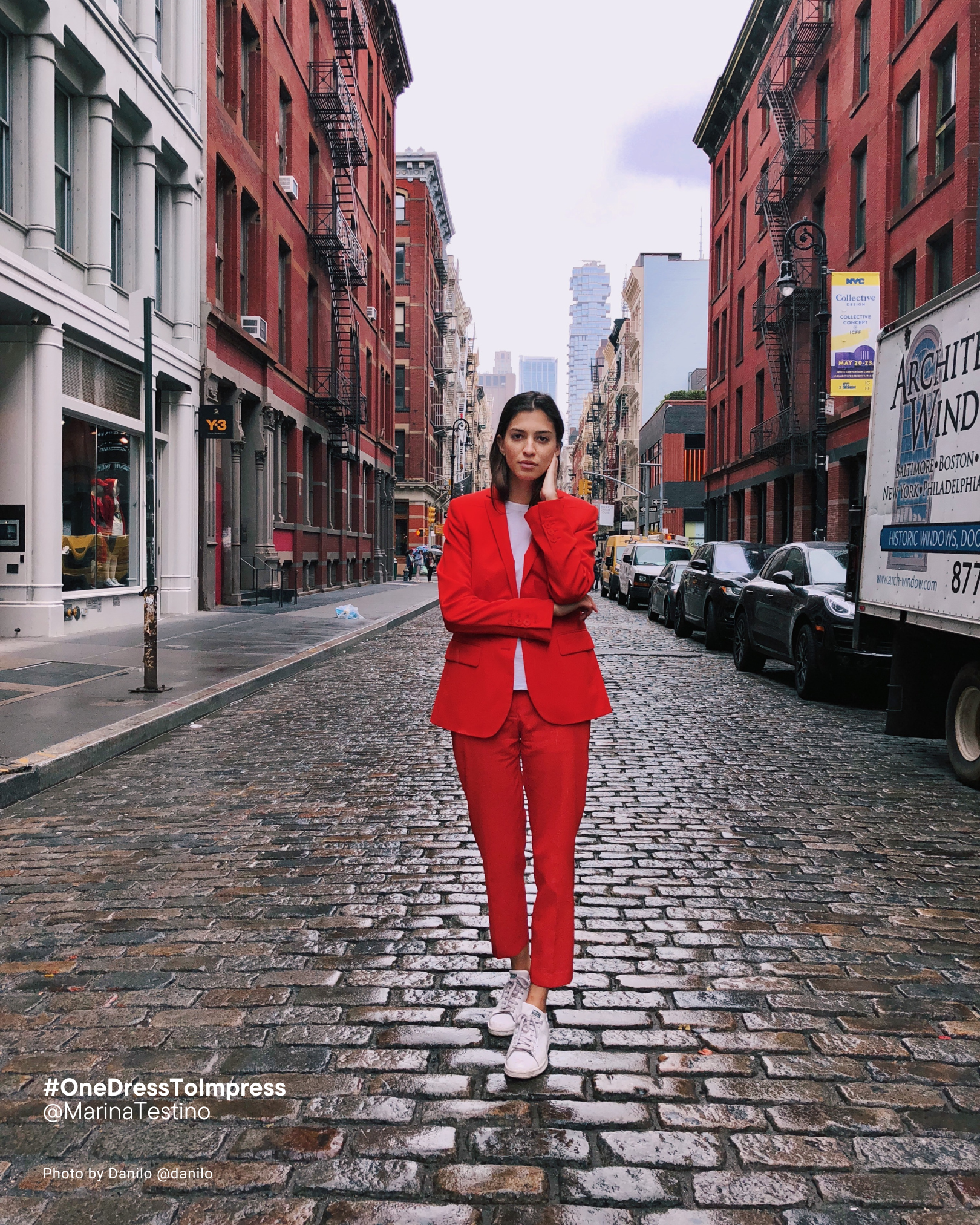
#OneDressToImpress was really my first step into sustainability. I wore the same red suit for 60 days to challenge the stigma around outfit repetition and overconsumption. Fashion was, and still is, so driven by novelty. There is this constant pressure to wear something new, post something new, buy something new. I wanted to challenge that in a way that felt stylish, visual, and easy for people to understand.
That campaign taught me the power of using creativity and art to educate and communicate in a fun, accessible way. It made people stop, look, and rethink their habits without feeling judged. I was also surprised and moved to see people around the world taking on the challenge themselves using #OneDressToImpress. What started as a personal experiment grew into something much bigger. It showed me that social media can do more than raise awareness; it can inspire people to take action and make real changes in their own lives.
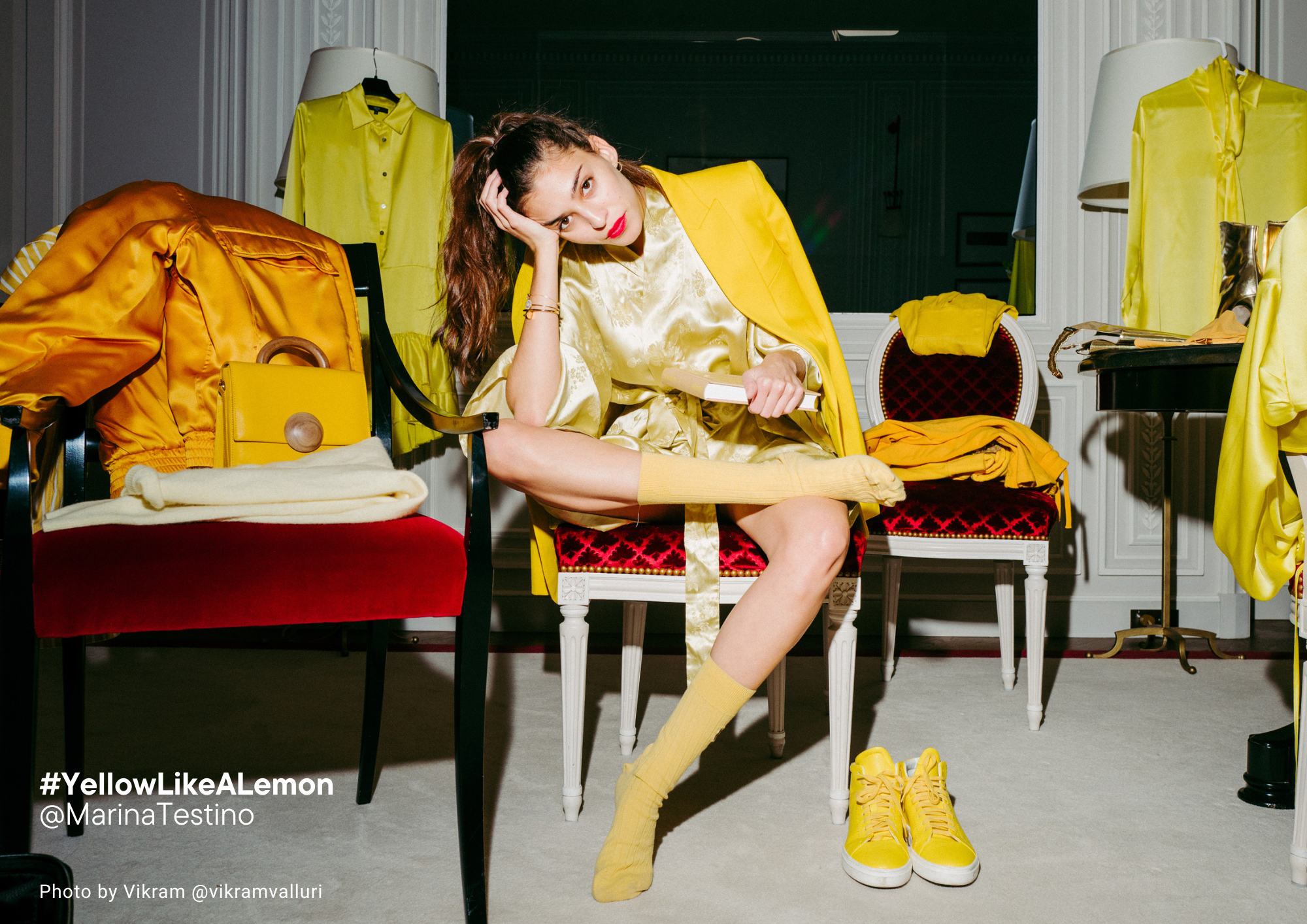
#YellowLikeALemon built on those ideas. With this campaign, I wanted to challenge the misconception that dressing consciously is complex, boring, dull or out of reach. I wore yellow for two months, arguably one of the most difficult colors to style, to show that sustainable fashion can still be colorful, versatile, trendy, and self-expressive.
To guide the activation, I used what I call the 4 Ss of Conscious Fashion: simplify, meaning wear what you already own; share, meaning borrow from friends and family; shop secondhand; and sustainably sourced, if you are buying something new. Together, those campaigns embody a core value of my work over the last decade: that sustainable fashion is not about giving up style. It is about looking at things from a new perspective and realising there are already so many better options around us, often without buying anything at all.
Through your work, you've collaborated with organisations and campaigns that encourage people to engage with environmental issues in a more accessible way. How can visual storytelling help turn awareness into action?
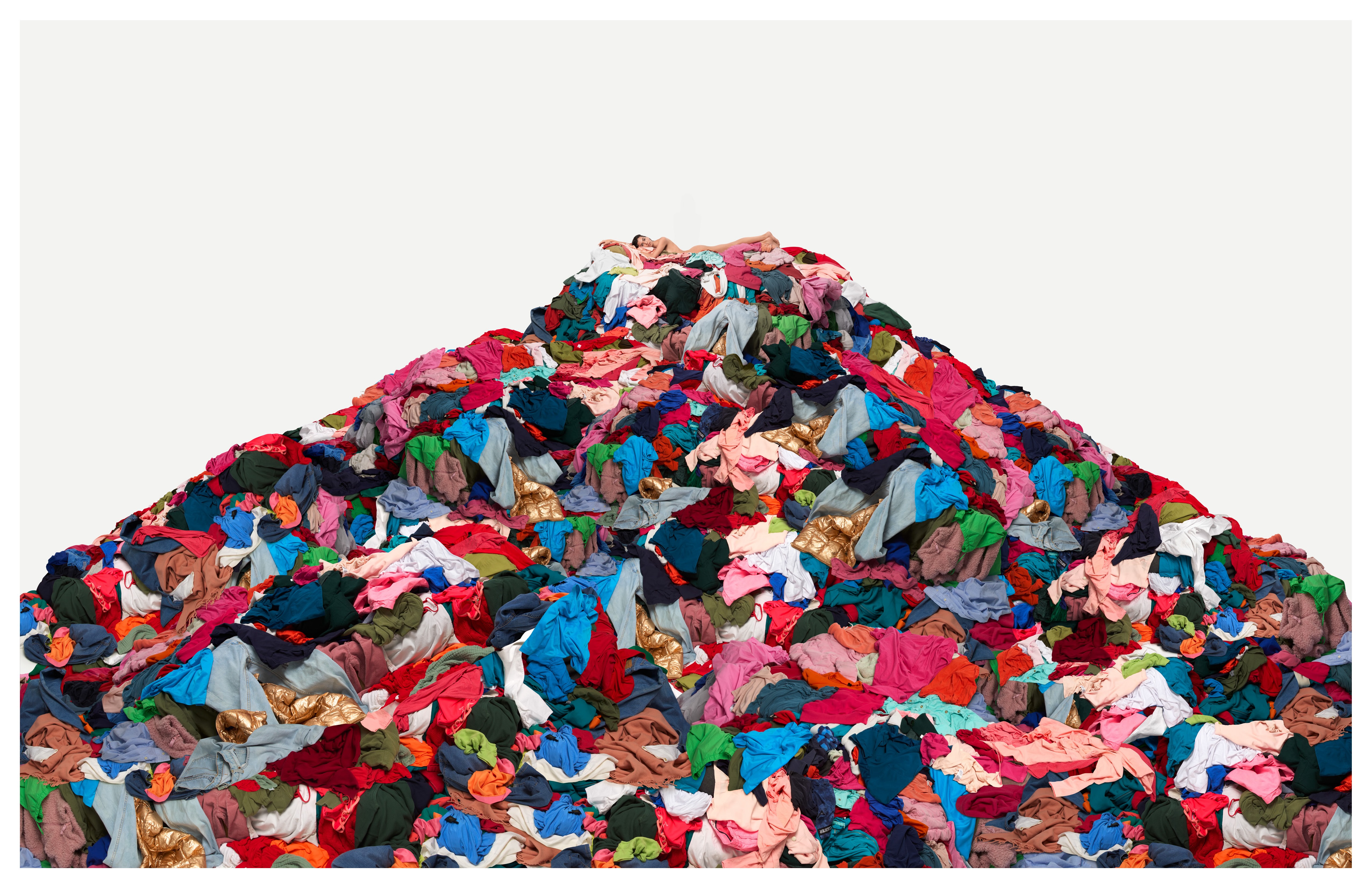
Visual storytelling is powerful because it breaks down complex issues. Language and numbers can become abstract very quickly, but an image, art installation, or experience can make a message emotional and immediate. That was one of the main goals behind re:FRAME, the photography exhibition I co-conceived with Enrique Badulescu. The project was inspired by the textile waste crisis in Chile’s Atacama Desert, but we wanted to tell that story through the fashion lense: imagery, color, beauty, and felt experience.
If we want fashion to be part of the solution, we have to speak to the industry in its own language. Through photography,, upcycled fashion design, furniture made with repurposed materials, interactive installations, and even scent, re:FRAME offered different entry points into the same issues.
For me, awareness turns into action when people feel connected and can see themselves as part of the solution. Art and visual storytelling make difficult subjects more human and approachable. Instead of pointing fingers, they invite people in and allow them to see familiar problems from a new perspective.
Sustainability is becoming an increasingly important conversation within the creative industries. What changes have you been most encouraged to see in recent years?
I am encouraged that sustainability is no longer sitting on the sidelines of fashion and creativity. It is becoming part of the brief, the design process, production, and the way brands speak to their communities. At the same time, I think we have to be honest. In some places, especially in the U.S., sustainability has taken a step back. Budgets that were once going toward sustainability projects, departments, and innovation have been reduced, and that is very disappointing to see.
Fortunately, Europe is continuing to move forward in a much more concrete way. The EU Strategy for Sustainable and Circular Textiles is pushing for textiles to become more durable, repairable, recyclable, and transparent. It includes measures like the Digital Product Passport, which can give consumers and companies clearer information about a product’s materials, origin, repairability, and end-of-life options. It also addresses issues like microplastics from synthetic textiles, textile waste, and Extended Producer Responsibility, which makes brands more accountable for what happens to products after they are sold.
Those kinds of policies are important because they move sustainability from a nice idea into something brands actually have to measure, prove, and implement. A decade ago, when I first started working in this space, “sustainable fashion” was still a very small niche. Today, it is slowly but surely becoming part of the mainstream.
I see more interest in circularity, upcycling, traceability, responsible materials, and transparency, and I am inspired by the new generation of consumers and designers holding brands to higher standards. What excites me most is when sustainability is approached with imagination. I love seeing the industry move toward solutions that are not only responsible, but also beautiful and aspirational.
Many people feel overwhelmed by the scale of environmental challenges. What are some simple but meaningful actions individuals can take to make a positive impact?
I always say: start where you are. You do not need to change your entire life overnight. Small, consistent choices can shift both your mindset and your impact. At home, it can be as simple as reducing single-use plastics, choosing refillable products, bringing your own bags to the supermarket, choosing fruit and vegetables without plastic wrapping, or saying no to plastic straws and utensils when you order food. Even better, avoid delivery when you can, because it often comes with so much unnecessary packaging.
It also means buying with more purpose. Before purchasing something, ask yourself: Do I really need this? Will I use it? Does it align with my values? With fashion, one of the simplest actions is to love and use what you already own. Repeat outfits without shame. Repair pieces. Restyle them. And, calling back to the 4 Ss of Conscious Fashion from #YellowLikeALemon, borrow, swap, rent, or buy secondhand before buying new.
If you do buy new, I love using the 30 Wear Rule. Ask yourself: will I realistically wear this at least 30 times? Does it work with what is already in my closet? Does it make sense for my everyday life? If the answer is yes, go for it. If not, you can probably skip it or find it through one of the alternatives above.
At the end of the day, the most conscious purchase is not always from a “sustainable brand.” It is a piece you will truly love and wear on repeat. A fast fashion piece you wear again and again is a more responsible choice than buying something from a conscious brand that you only wear once. Keep asking questions and making small changes where you can. The most important thing is progress, not perfection.
Looking ahead, what gives you optimism about the future, and what projects or initiatives are you most excited about over the coming year?
What gives me optimism is the growing understanding that sustainability can no longer live in a silo. The most meaningful solutions happen at the intersection of different worlds: science, fashion, art, education, technology, communications, and culture. When people come together around a shared purpose, we gain the creativity and perspective needed to address complex environmental issues.
That is what excites me about #AquariumOfTheWorld (@aquariumoftheworld), a campaign I launched on World Oceans Day with a cross-disciplinary team of artists, scientists, communications strategists, activists, NGOs, and legal experts to raise awareness around the Gulf of California. The Gulf is one of the most important marine ecosystems on Earth. It is home to nearly 900 fish species, including around 90 endemic species, meaning they exist nowhere else. It also contains 39% of the world’s marine mammal species and one-third of the world’s marine cetacean species, which is extraordinary for one region.
Today, this ecosystem is facing urgent threats from proposed liquefied natural gas (LNG) development, which would bring more industrial infrastructure and vessel traffic into one of the most biodiverse marine areas in the world. For whales and other marine mammals, that is especially dangerous. They depend on sound to communicate, feed, navigate, and reproduce, so increased underwater noise can disrupt essential behaviors. More ships also mean a greater risk of collisions, pollution, and habitat degradation in waters that are critical for species like blue whales, fin whales, sperm whales, dolphins, and other marine life.
With #AquariumOfTheWorld, the goal is to show how the tools already at our disposal can create real momentum. Social media can be more than a place to post. It can educate, connect, and mobilize people. Through the campaign, we are inviting people to share their own ocean moment using #AquariumOfTheWorld, while also encouraging them to sign an open letter as a concrete way to support the Gulf’s protection.
For me, this work is about the Gulf of California, but it is also about something much bigger. Oceans are interconnected, and protecting one extraordinary ecosystem is part of protecting ocean health everywhere. I am excited by initiatives like this because they remind us that change becomes possible when people from many fields come together around one shared responsibility.
Readers can learn more, get involved and sign the open letter by following @aquariumoftheworld on Instagram.
July, 2026